BALANCE//STATE
BALANCE//STATE
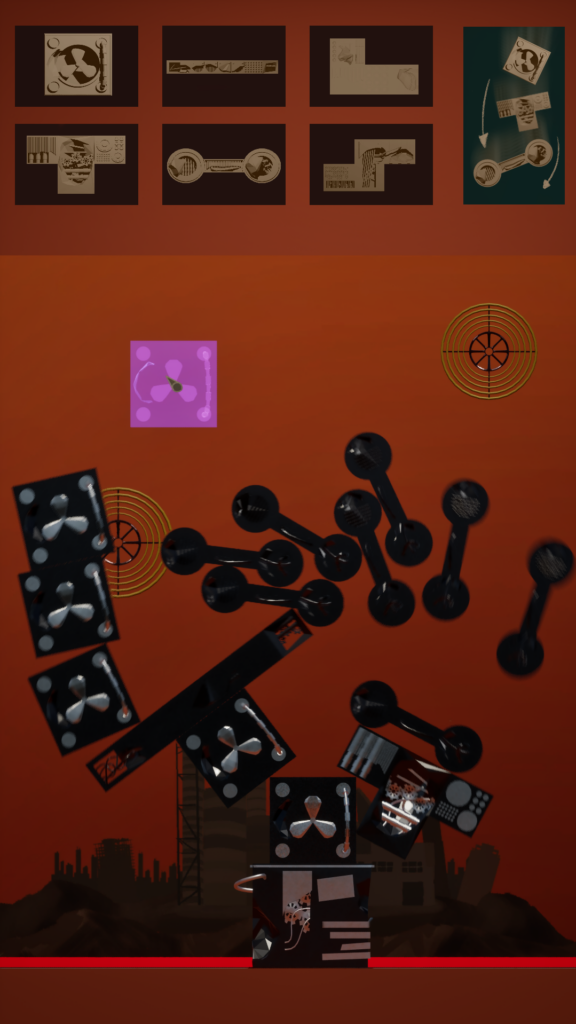
BALANCE//STATE is a single-player 2D puzzle prototype developed in Unreal Engine 5 during the summer semester 2025 (Prototyping 2). The assignment was to design and develop a mobile game with a strong focus on a single core mechanic. Instead of building around narrative or progression systems, the goal was to deeply explore one gameplay verb and refine it through iteration and testing.
The result is a gravity-based tower-building game centered on one core action: balancing.
CORE MECHANIC
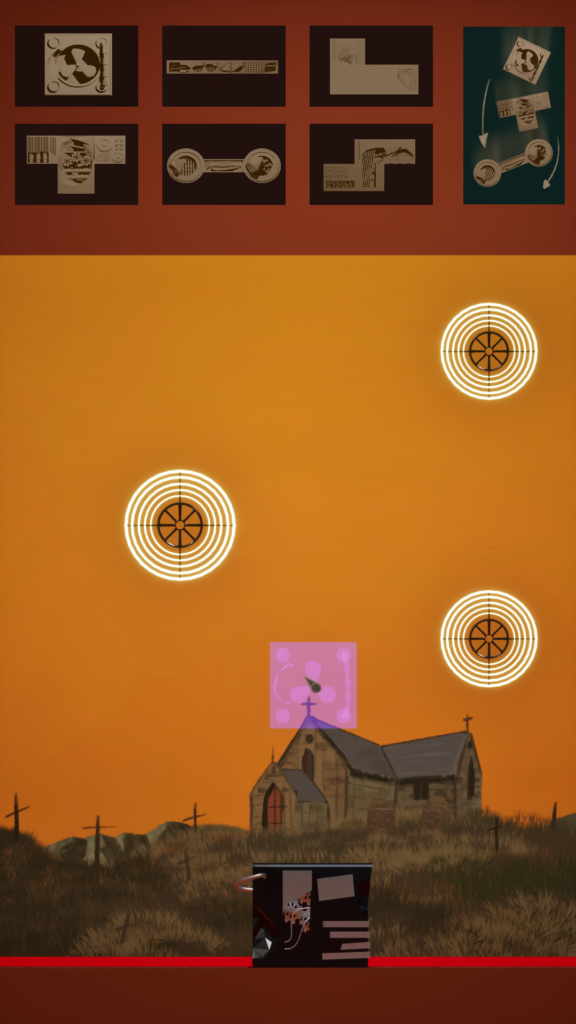
Players build a tower starting from a fixed base platform. The objective is to reach and touch specific target nodes placed in the level while ensuring that the structure remains stable once gravity is activated.
Build Phase
Gravity is disabled.
Players freely place construction pieces.
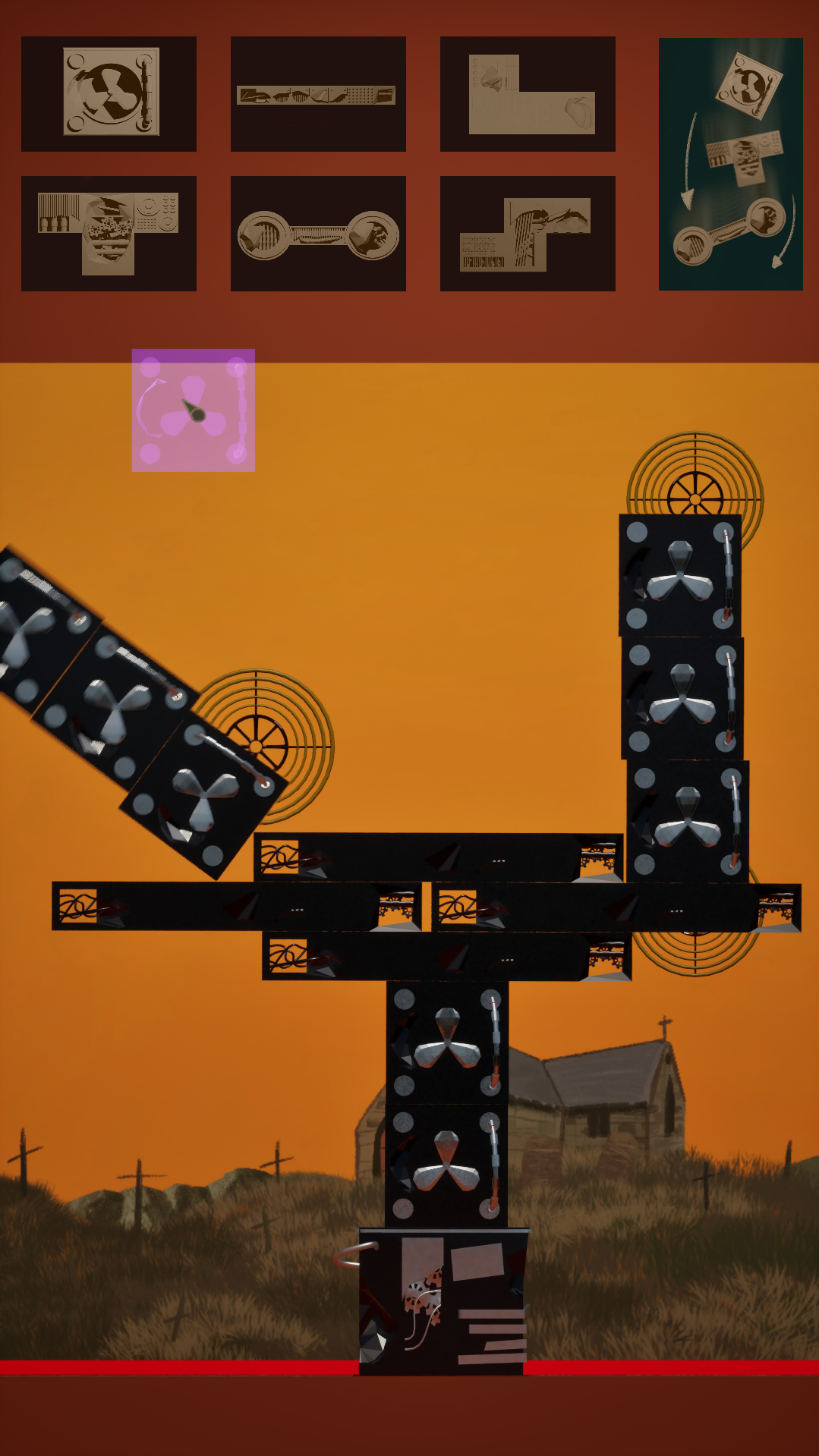
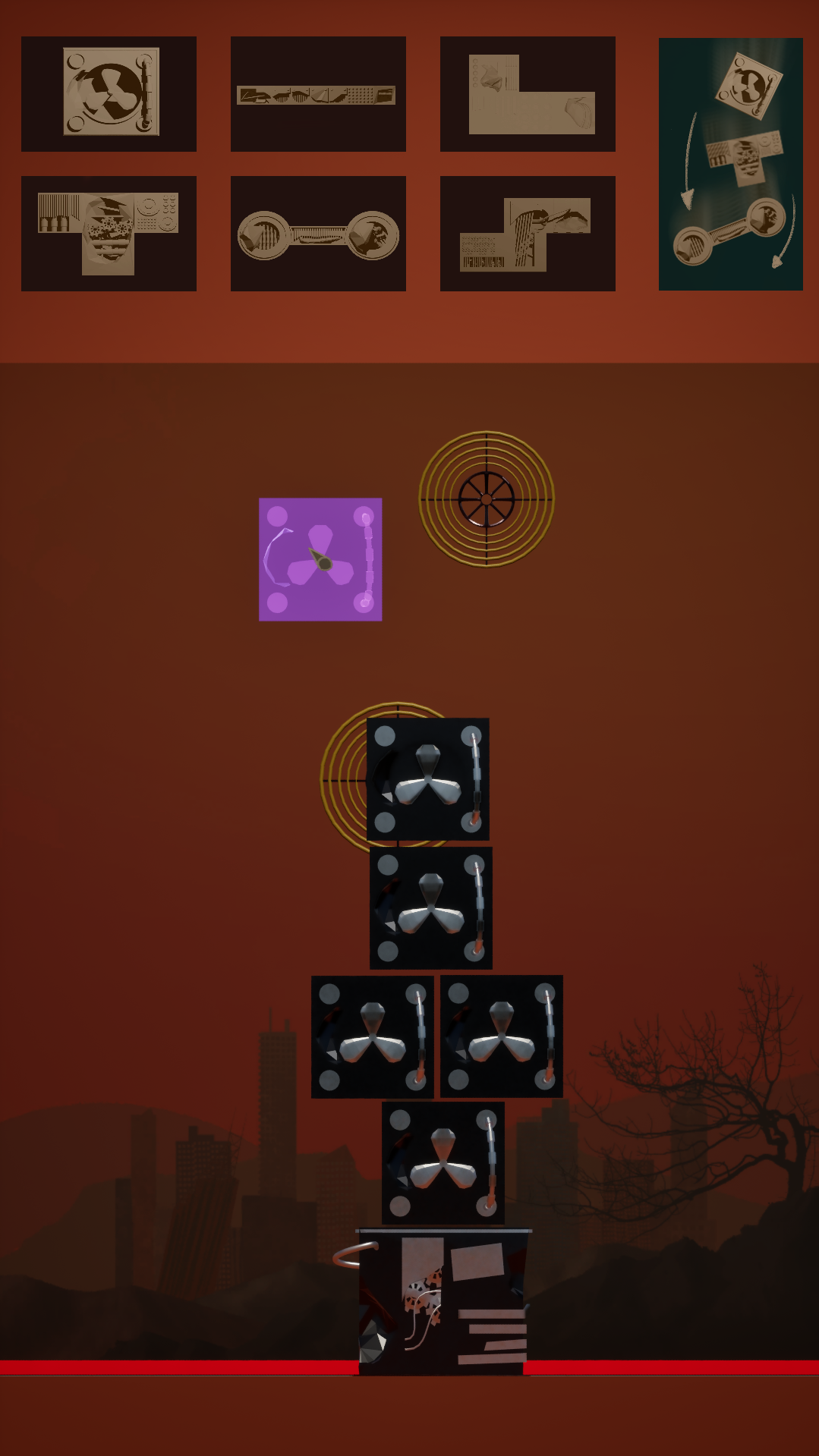
Test Phase
Gravity is activated.
The tower either holds or collapses.
Development Summary BALANCE//STATE
BALANCE//STATE began with a clear constraint: design a mobile game focused on a single core mechanic. Instead of starting with narrative or aesthetics, the development process centered on identifying and refining one strong gameplay verb. The word “balance,” generated early in the ideation phase, became the foundation of the entire project.
The first iteration was a paper prototype. Using cut-out shapes and a drawn goal line, I tested whether building a stable tower could create meaningful challenge. Early playtests revealed structural weaknesses: a simple vertical goal was too easy, certain shapes were either unnecessary or overpowered, and horizontal extension pieces were essential for interesting solutions. These insights shaped the reduced but intentional set of six building elements in the final prototype.
A major turning point came with the gravity mechanic. Initially, players could toggle gravity freely. However, playtesting showed that this removed tension and disrupted emotional pacing. The constant checking of stability eliminated suspense. The solution was to divide the game into two clear phases: a build phase without gravity and a test phase with gravity activated. This separation introduced a decisive moment of uncertainty and strengthened the core experience.
The transition from paper prototype to Unreal Engine 5 introduced new technical challenges. Precise placement required a preview system. Reset timing had to feel immediate. UI scaling created format issues. Some problems, such as overlap detection and interface limitations, remain imperfect. Nevertheless, the core mechanic remained intact throughout implementation.
Another important development decision concerned motivation. I initially designed a point-based system with weighted building pieces to create a high-score structure. During playtests, however, I observed that players naturally created their own challenges without external rewards. Many experimented freely or imposed self-made restrictions. This led to the deliberate removal of extrinsic scoring in favor of intrinsic motivation. The satisfaction of achieving balance became the reward.
Throughout development, theoretical frameworks such as Tom Smith’s verb analysis and the DDE framework helped clarify design intent. They reinforced the decision to keep the system minimal and allow strategic depth to emerge from player choice rather than additional mechanics.
In the end, BALANCE//STATE became an exercise in reduction. The focus was not on feature expansion, but on preserving the clarity and tension of a single mechanic. The project strengthened my understanding of iteration, playtesting, and the relationship between mechanical design and player experience.